The recent emergence of AI is impacting student’s education and learning curriculum, prompting questions on whether or not AI is being used properly in schools and raising concerns on how it will change education as a whole.
AI tools are becoming more accessible to students and because of this teachers are starting to have to distinguish between what is AI generated and what is actually hand-written.
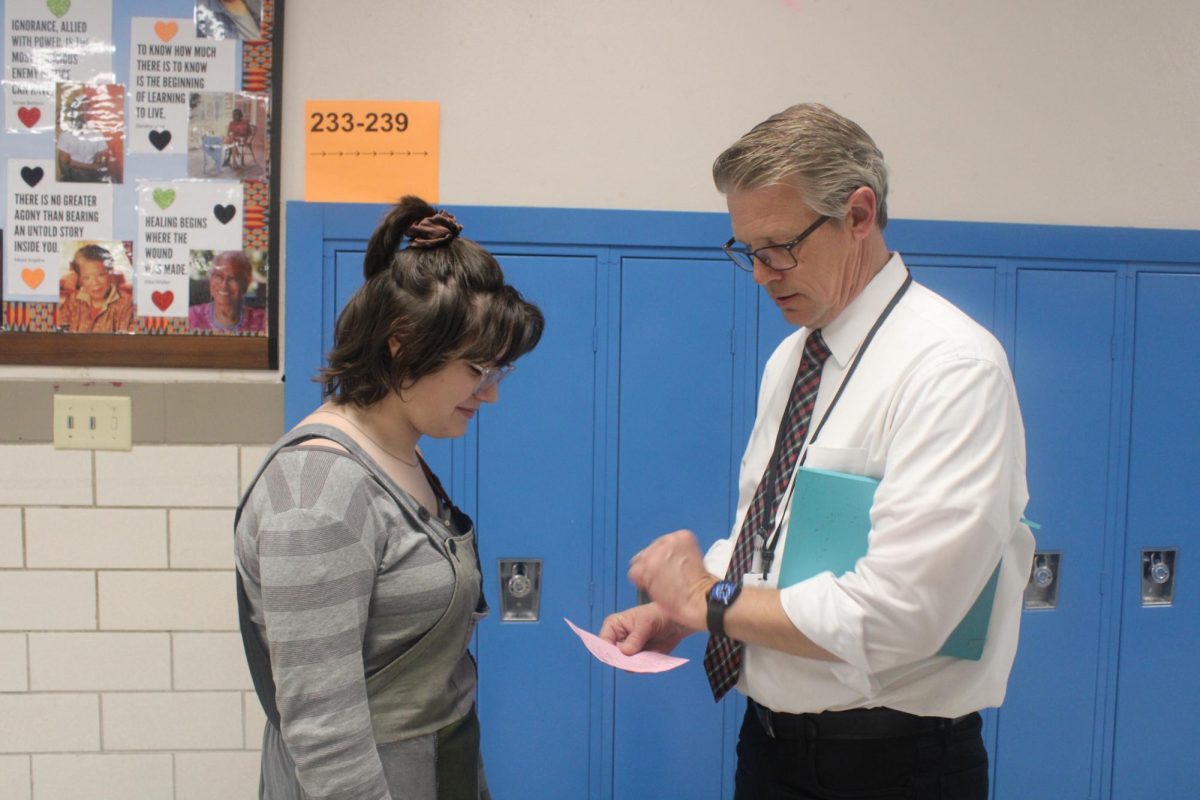
English teacher Angela Huber has noticed that she is seeing much more AI-written materials than she had in the past.
“I too often feel like I am reading the work of an LLM rather than the work of my students. Even when I design pen and paper tasks, I have students turn in responses that are obviously AI generated,” Huber said.
Huber finds that the issue is not in the absence of academic honesty, but in the potential loss of creativity and critical thinking skills. English teacher Louise Haar-Chapman showed similar concerns.
“I see two huge problems with AI. One, it kills the planet. Two, if students are using AI and only AI to generate work, they are not allowing their brains to grow.” Haar-Chapman says, “They are essentially preventing synapses from firing and dendrites from growing.”
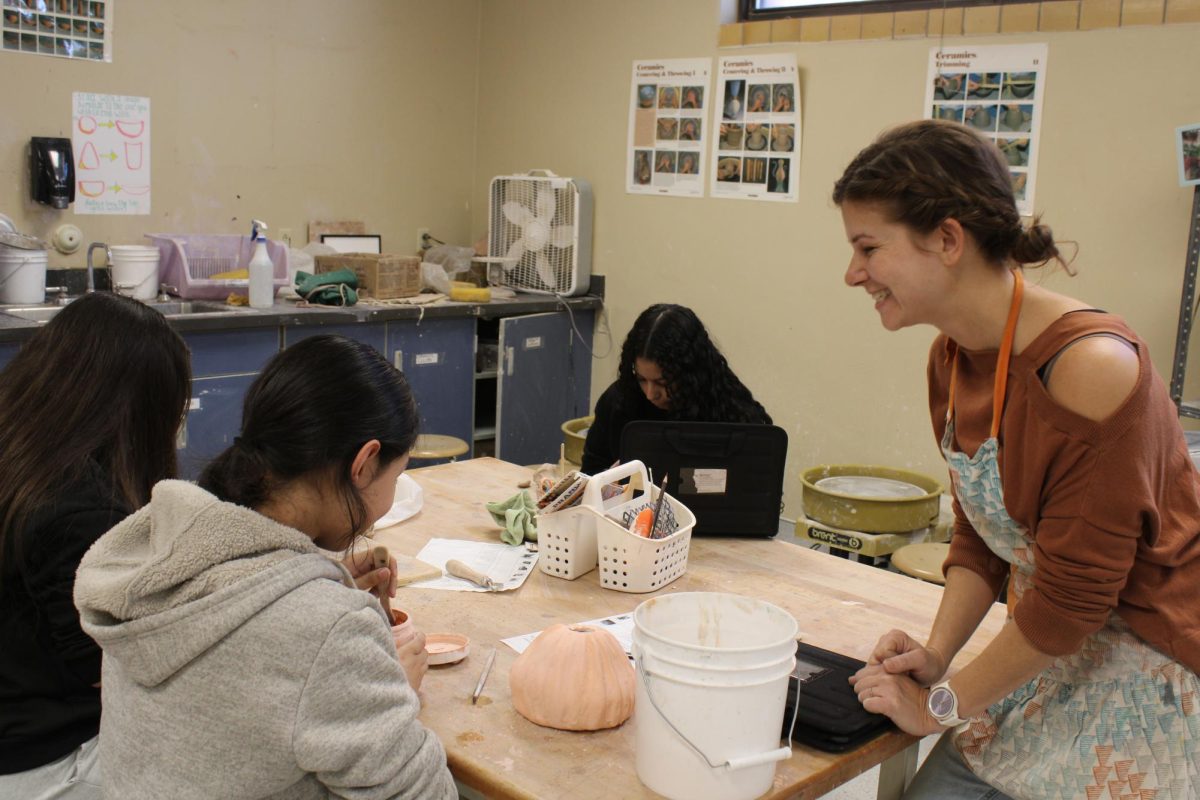
Art teacher Julie Quintero thinks similarly as well, although she does encourage her students to use AI to help come up with ideas for their art projects.
“So many students already struggle with problem solving. I fear using AI while their brains are still developing would be detrimental,” Quintero said.
Time Magazine published an article this past April by Catherine Goetz called “The Real Reason Why Students Are Using AI to Avoid Learning.” The article describes how a hardworking college student feels significantly “dumber” for using AI for things like the summarization of a reading. But even for something as small as that, the student does not feel like any schoolwork that they do is rewarding.
Goetze writes, “The harm isn’t only academic; it is emotional too. Earning an A on an essay you did not write does not build confidence; it undermines it, reinforcing the damaging belief that success is only achievable with AI assistance.”
Junior Wilbur Starr explained how AI is not being used properly by students and is instead used like a shortcut to get work done quickly and with less effort involved.
”The main use of AI and how it is marketed and perceived is mainly for the ways of going straight to an answer, and most times the AI just blindly agrees or makes things up. It would be, and currently is, misused,” Starr said. “Instead of being something to implement to make things easier and better, it is instead used to skip the work, get quick answers, and generate random photos.”
Sophomore Jewel Robinson expressed that even students who do their work without the use of an AI find that it can still cause misunderstandings.
“Because AI uses real examples of human data but adds its own generated twist to it, I have seen some of my friends and peers get wrongly accused for AI writings,” Robinson said.
Some teachers see opportunity and value in AI. Haar-Chapman has chosen to find a way to work with AI in her classroom, not against it.
“We look at how AI can be used as a tool,” Haar-Chapman stated. “Did you miss a peer review? Okay, set up a screen recording where you show me what you asked AI to do, and then provide me with the recording with what AI did. Are you stuck on aspects of a topic? Ask for help generating sub topics for an idea.”
Students themselves find that there can be effective and good ways to use AI in education in a way that is not harmful towards learning.
“A good way for schools to implement AI for student and teacher use is to allow for students to utilize it as a research finder; however, teachers should also still encourage it to be completely written by the student so teachers can use websites like GPTZero to detect AI writing.” Robinson suggested.
Additionally, Huber thinks the same. She thinks that AI could be used as a tool alongside learning.
“Use it sparingly and with permission from your teacher. Use it as a thinking partner and not to replace your thinking,” Huber said.
As a whole, Ritenour High School students and teachers see potential in AI, as long as it is used in a way that is not harmful towards the learning process for students.
“The best way to prevent abuse of technology or fear around the technology is to learn how to use it,” Haar-Chapman said.