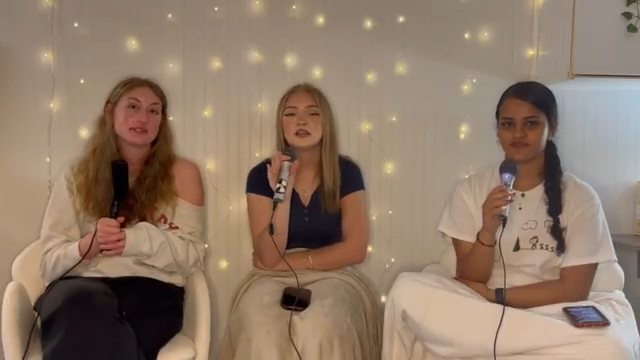
A trio of juniors decided it was time to bring more attention to mental health as a whole, but more specifically the mental health of students, so they created a podcast to spread their message.
Grace Key, Olivia Curd, and Julia Abdelhalim created their first episode of “Mind Matters” over the summer. Curd stated that she started the podcast to give people a real space to feel understood and judged.
“I wanted to create something real, a space where people could feel understood instead of judged,” Curd said. “After going through grief, family struggles, and my own mental health challenges, I realized how rare it is for teens to have open, honest conversations about what we actually go through. We wanted to turn our experiences into something meaningful, something that could make people feel less alone.”
So far, the three have put out two podcast episodes since July. Abdelhalim says one of the group’s goals for the podcast is for it to be creating more content.
“My goals for this podcast would definitely be becoming more consistent with our uploads and possibly being able to engage other people with their stories within the podcast.” Abdelhalim said.
There are both positives and negatives to running a podcast while still trying to fill other roles. The three of them all agree one of the hardest things about running a podcast with friends is the differences of opinion there are due to differences in their lifestyles.
“The hardest part about producing the podcast with my co-hosts is just sometimes agreeing on topics we should talk about and how advertising should be done,” Key said.
While there are conflicts and arguments with the girls, Abdelhalim believes their differences just means there is more to be said and more different opinions.
“I think the most difficult part of running the podcast with friends is our unique experiences and upbringings that may cause us not to understand each other as much as we’d like,” Abdelhalim said. “However, I think that’s the most beautiful part of it all, that we all each have something different to contribute.”
Curd recognizes one of the great things that came from the podcast is the healing she gained from it.
“It’s definitely helped me heal in ways I didn’t expect. Talking about things I used to keep bottled up has helped me process them. It’s also shown me how strong I am, and how much power there is in vulnerability,” Curd said.
All three members believe different conversations need more attention. Key believes being able to express emotions is a conversation that still needs to be talked about while Curd and Abdelhalim believe childhood and family trauma needs to be addressed.
“I think we still need to talk more about the quiet kinds of pain, like emotional neglect, grief, and the feeling of having to be “the strong one” all the time. People often focus on depression or anxiety in big, dramatic ways, but they forget about the small, invisible battles that shape us,” Curd states, “We also need to talk more about how family trauma affects teens, and how healing isn’t just about therapy, it’s about understanding, forgiveness, and rebuilding yourself.”