Ritenour has implemented a new phone ban this school year after a law passed by Governor Mike Kehoe forced all school districts to come up with their own phone policy.
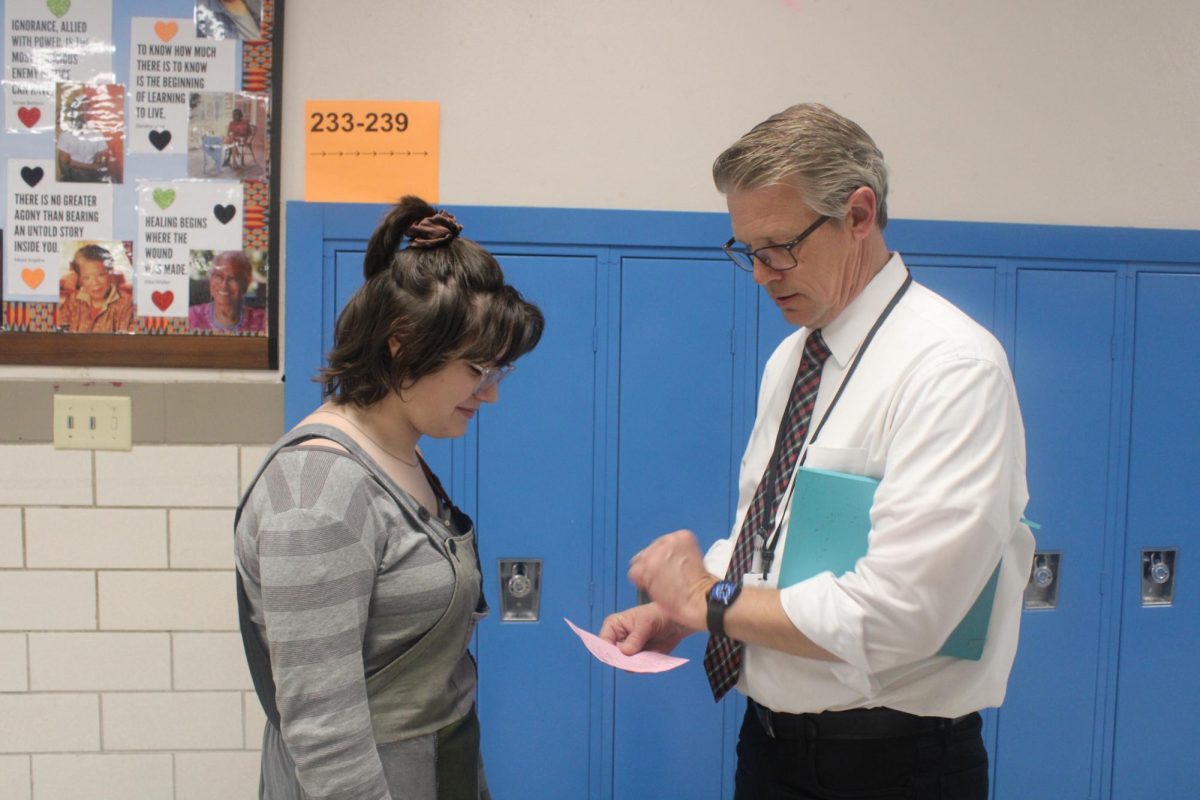
Ritenour implemented its “No Cell Until the Bell” policy at the start of the school year. Students are not allowed to have their phone out, unless there is a safety emergency or it is being used for medical health. If a teacher sees the student with a phone, they will first give the student a warning, then if it remains a problem it is a call or email home, and finally, a third issue will result in a referral. Teachers can also refer students to their grade level office to place their phones into the phone lockers if the offenses continue.
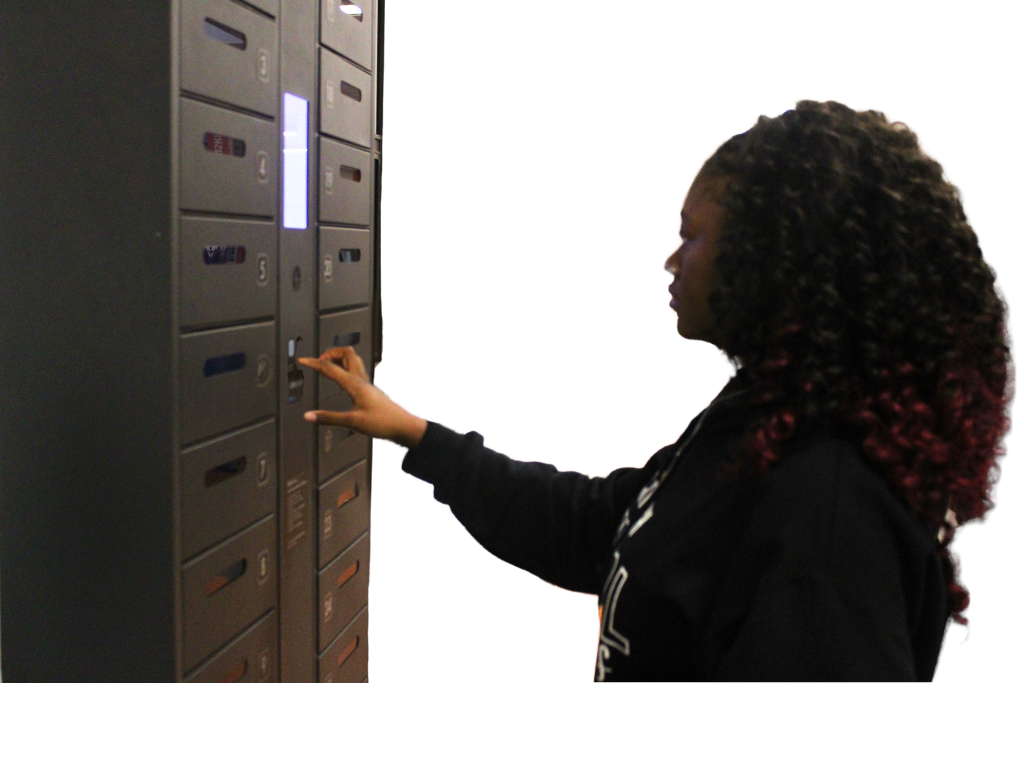
The phone locker is a large black box in the lunch rooms and by the main offices. Students can put their phone in there to charge, and have a code or use their fingerprint so only the student that placed their phone into the locker can have access to it at any time.
HOW DID WE GET HERE?
Backtracking to some years before the pandemic helps fully understand the reasoning for this new law and policies that came from it. In 2019, California Governor Gavin Newsom first signed AB 272 into law, which stated that specified school districts have the authority to regulate the use of smartphones during school hours, and it wasn’t until this June when he revealed that he was making efforts to restrict the use of cell phones during the school day.
“As the Surgeon General affirmed, social media is harming the mental health of our youth.” Newsom wrote in a statement. “When children and teens are in school, they should be focused on their studies– not their screens.”
Following this, California School Boards Association (CSBA) said any regulations on students’ cell phone usage should be left up to individual school districts.
“We support legislation which empowers school leaders to make policy decisions at a local level that reflect their community’s concerns and what’s necessary to support their students,” said CSBA spokesman Troy Flint.
The new law did have some flexibility. One example was that schools couldn’t prevent the use of a cell phone if it had been signed off on by a doctor. Along with this, during emergencies, students were allowed access to their cell phones, however, districts were the ones to determine what scenarios were deemed to be an emergency.
In January of 2025, New York Governor Kathy Hochul revealed a plan to restrict phones in schools statewide by the start of the 2025-2026 school year. This included no sanctioned use of cell phones and other internet-enabled devices on school grounds in K-12 schools for the entire day, including classroom time, lunch, study hall, and passing periods. It allowed schools to develop their own plan for storing smartphones throughout the day, giving administrators and teachers the flexibility to do what works best for their building and students. It also proposed $13.5 million in funding available for schools that might need assistance in purchasing the storage solutions required to help them go distraction-free.
This led to Missouri joining in on the idea to ban phones. The act passed by Kehoe said that schools needed to make a policy for the use of cell phones, including whether or not they could be used for educational purposes or designated areas. Ritenour did not include that in their policy.
It also said that the school’s policy may provide that a student who possesses or uses such an object is in violation of said policy, and may be subjected to disciplinary action.
THE RITENOUR PLAN
Senior Principal Dr. Austin Ferguson explains that Ritenour went through a multi-step process when it was clear that legislation was on the way to put a plan in place.
“Whenever we had the idea come up in conversation last year, we had a number of students who put together presentations. We went through and looked at their presentations to look at what the implications might be for our building or different ways that we could roll it out for staff and students,” Ferguson said.
Ferguson mentioned that it was also important to get returning staff on board with the policy, since they would play a major role in both enforcing and modeling it.
“We made sure that whenever staff were returning for the school year that we discussed with them that these are not just expectations for the students but for them as well, because we want them to lead through their actions, not just through their words, so it would not just be a do as I say, not as I do type of thing.”
Ferguson noted that Ritenour went about the phone ban in a different way than other schools did. Other school districts in the surrounding area immediately used pouches, or used them if they saw a phone out just once. Ritenour went about it as a trust system. Ferguson believes that staff and students should be able to have responsibilities over their own devices, trusting them to keep them in a pocket, purse, or backpack
STUDENT RESPONSE
Senior Michaela Helton agrees with the phone ban, although she believes that a full day without looking at a phone is a little unrealistic.
“I personally like the phone ban, it allows students to connect with their peers instead of just sitting on their phone all class,” Helton also adds “I would change to us being able to use our phones during passing periods or breaks and lunch because I feel like not being able to use our phones during that time is kind of silly.”
However, Freshman Keelan Whiteside disagrees with Helton, and finds the whole policy problematic.
“I feel the phone ban should have never happened because people won’t be locked in more, and people will have less focus,” Whiteside said.
Junior Karen Ayala Alas has mixed feelings about the ban.
“I’m neither towards the negative nor the positive side. I feel like a positive side is that we can just finish work and not be distracted as much. But on the negative side, it’s just going to get people to skip more. And also with our safety concerns, that could definitely be a problem,” Ayala Alas said.
HOW IS IT GOING?
Ayala Alas notes that the teachers are trying to enforce the policy, but that is still a learning process for all people involved.
“They understand that it’s difficult, and these days technology is a huge thing, so they understand, but they still try to enforce it,” Ayala Alas said. “Some teachers are trying to enforce it not in a weird, mean way. While some other teachers are just really strict about it, and they don’t really understand the mindset of it,” Ayala Alas said. “Some teachers do not put their part in as much as we are, and they are on their phones as well.
Helton has also noticed a difference in how certain teachers are enforcing the policy.
“There aren’t a lot of teachers enforcing it. However, there are a handful that will write you up,” Helton said.
Leadership and science teacher Rob Weissler and media teacher Kevin Pulley have seen a lot more engagement with their classes since the ban has been put into place.
“I feel like I have seen some students more engaged because some students just have a habit of getting their phones out frequently, just because they’re bored,” Weissler said.
Pulley agreed, but noted that with his media classes, it can sometimes be extra challenging since students were used to using them for class.
“I think it does actually help. It’s challenging for us in media because, as you all know, we use them to snap pictures and things like that, but overall, I think it’s a good thing.” Pulley said.
LOOKING AHEAD
As Ritenour continues to enforce the new policy, the administration wants parents and students to know that although the phone ban is in place, they still want students to have access to their phones in cases of emergencies or family issues.
“As soon as students get in the building, we want you to have access to your phone. If there is an emergency that takes place in the building, God forbid, we want everybody to be able to have their phones so that they can be in contact with friends, family, whatever they might,” Ferguson said. “We don’t want to restrict people from having that access to their students either. Families need to be able to contact their kids, they just need to get something that isn’t as pervasive as it was in the past.”